“Collaboration is a must”: PETAN urges Africa to embrace Nigeria’s local content model
Oredola Adeola
The Petroleum Technology Association of Nigeria (PETAN) has urged stronger public–private supplier collaboration across Africa’s oil and gas industry.
Noting that Nigeria’s NOGICD Act, implemented by the NCDMB, has delivered impressive results, raising in-country value retention and local manufacturing from 5% in 2010 to 56% in 2024, a model PETAN believes other African jurisdictions should adopt.
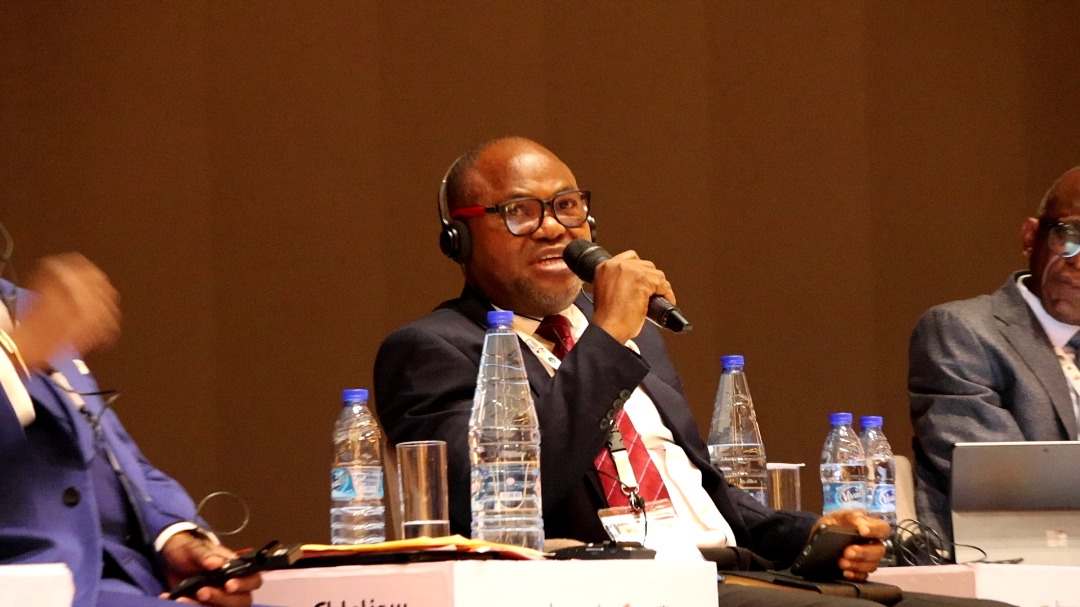
Engr. Kevin Nwanze, Executive Secretary who represented PETAN Chairman, Engineer Wole Ogunsanya, made the remarks during his paper presentation at the 4th Conference and Exhibition on Local Content in the African Oil and Gas Industry (CECLA), organised by the African Petroleum Producers Organisation (APPO) in Kintélé, Brazzaville, Congo.
Speaking on the theme “Sustaining Public/Private Suppliers Collaboration in the African Oil and Gas Industry,” he underscored the importance of deepening partnerships to drive long-term growth and competitiveness across the continent.
Nwanze explained that the complexity of modern oil and gas projects has made collaboration indispensable.
According to him, “Collaboration is no longer a ‘nice-to-have’ but a ‘must-have’ for sustainable local content in Africa’s oil and gas industry.”
Nwanze noted that the relationship between public and private suppliers must balance collaboration, competition, and regulation, stressing that regulation remains the backbone of any successful partnership.
He noted that Nigeria’s regulatory foundation—the Nigerian Oil and Gas Industry Content Development (NOGICD) Act of 2010, has been central to the country’s progress in local content development, implemented effectively by the Nigerian Content Development and Monitoring Board (NCDMB).
“The NOGICD Act remains the primary engine driving fairness, transparency, and measurable local content growth in Nigeria’s oil and gas sector,” he said.
He added that Nigeria’s in-country value retention has risen from 5% in 2010 to 56% in 2024, a development he described as proof of what is achievable under structured collaboration.
Nwanze argued that collaboration is essential because oil and gas projects require both the financial and technical power of international firms and the community knowledge and contextual expertise of local suppliers.
He warned that without collaboration, countries risk project delays, cost overruns, and minimal benefits to host communities.
“Today’s oil and gas projects are too complex for any single party; without collaboration, delays, cost overruns and poor host-country benefits are inevitable,” he said.
The PETAN ES, however, cautioned that several obstacles continue to hinder cross-sector collaboration in Africa, including weak policy environments, difficulty accessing finance, trust deficits, capacity gaps, and inconsistent operational standards.
“Weak policies, financing gaps, trust deficits, and capacity limitations remain the biggest obstacles to effective collaboration across Africa,” he noted.
He urged African governments to shift from merely setting local content targets to building truly enabling frameworks.
“African governments must move beyond setting targets and focus on creating enabling environments that simplify procurement and expand access to finance,” he stated.
Nwanze said, “Open procurement, contract publication, and independent oversight are non-negotiable if we want sustainable and trust-driven collaboration.”
On technology transfer, he stressed that private sector commitment is crucial for meaningful progress.
“Technology transfer can only succeed when private companies make a firm commitment to support local suppliers and the change-management process,” he added.
He cited Nigeria’s successful collaboration models, including the engineering consortium on the Egina FPSO topsides, the EnServ–Schlumberger alliance, and the Kwale Gas Gathering (KGG) Hub, noting that all were enabled by the NOGICD Act.
“Nigeria’s major project collaborations, from Egina FPSO engineering to the EnServ–Schlumberger alliance, were only possible because the NOGICD Act provided the regulatory backbone,” Nwanze explained.
He therefore charged Africa to build long-term capabilities within local suppliers and diversify into emerging energy technologies.
“True sustainability comes from building lasting capabilities, not just transferring jobs; Africa must invest in skills, innovation, and sector diversification,” he said.
The PETAN ES also pointed to emerging opportunities in renewable energy integration, carbon capture, utilisation and storage (CCUS), and decommissioning of oil and gas assets.
“Collaboration will be critical as Africa moves into renewable integration, carbon capture, and decommissioning—skills in these areas will define the next decade,” he added.
Calling on African governments to adopt proven models, Nwanze urged policymakers to look closely at Nigeria’s experience.
“What has worked in Nigeria can work elsewhere. The NOGICD model is ripe for adaptation by other African jurisdictions seeking real local content growth,” he said.
The ES therefore emphasised that sustainable progress is impossible without strong regulation and empowered implementing agencies.
“There can be no sustainable collaboration without strong, workable regulations and an empowered, independent local content implementing body,” Nwanze said.