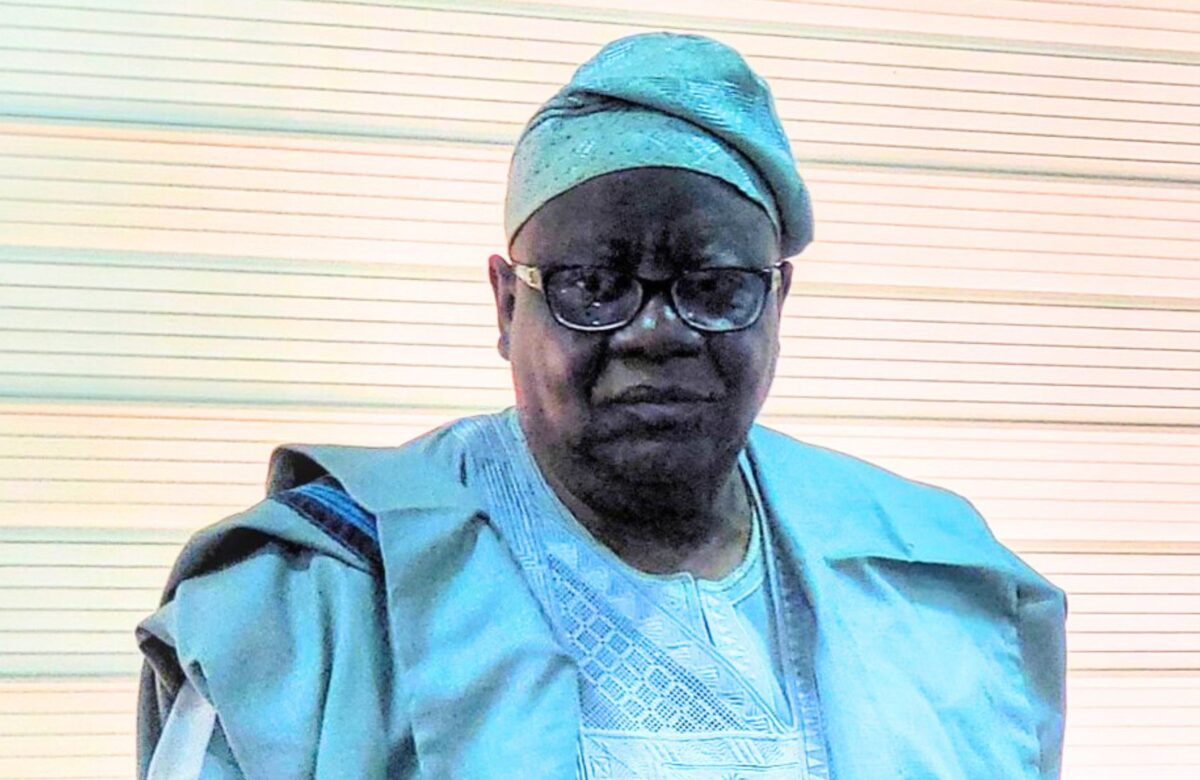
Biomass energy in transition plan could lift Nigeria’s agric GDP share from 26% to 40% in 5-years — Dr. Dairo
Dr. Omotayo Dairo, founder of Quintas Renewable Energy Solutions, has revealed that a major gap in productive-use energy delivery (adoption of biomass solutions into the country’s energy transition strategy) must be closed to drive rural industrialization, unlock value addition, and boost agriculture’s contribution to Nigeria’s economy.
He emphasised that with Intergration of all the energy mixes and their infrastructure, the Federal Government could raise agriculture’s contribution to the nation’s GDP from the current 26% to as high as 35–40% within five years.
Dr. Dairo, a medical doctor turned renewable energy entrepreneur, made the call on Wednesday during an exclusive interview with Advisors Reports on the sidelines of the Renewable Energy and Energy Efficiency Associations Alliance (REEEA-A) 2025 International Conference held in Lagos.
He acknowledged progress by the Rural Electrification Agency (REA), which has deployed more than 200 off-grid projects in the past decade, but stressed that a critical gap remains in delivering productive-use energy that drives rural industrialization and value addition.
Dr. Dairo explained that Quintas has adopted a proof-of-concept strategy for its rural programmes, setting up pilot centers in semi-rural areas to demonstrate the viability of biomass-powered agro-processing equipment.
He revealed that while smallholder farmers are unable to afford the high capital cost of such technologies, the company is engaging impact investors to finance the equipment, leaving farmers as the direct beneficiaries.
“Farmers are not our primary customers; they are our impact point. Investors buy the equipment, but the benefits go to the farmers. For example, cassava, which has a five-day shelf life, can be processed into Garri and stored for 18 months,” Dairo explained.
He added that transporting unprocessed crops to urban centers leads to post-harvest losses and higher logistics costs. Village-level processing, he argued, creates local value, retains income in rural communities, and reduces inefficiencies along the agricultural supply chain.
Dr. Dairo, founder of Quintas Renewable Energy Solutions, has identified a major policy gap in Nigeria’s energy transition framework — it’s overwhelming focus on solar photovoltaics (PV).
“There are at least eight forms of renewable energy, but government attention is fixated on one, solar PV,” he noted.
He argued that solar PV alone cannot meet Nigeria’s industrial heating needs, which account for up to 83% of energy demand in some economies. Biomass, he stressed, is capable of providing the heat required for Agro-processing and small-scale manufacturing, thereby supporting industrialization.
“We are asking government to integrate biomass into the energy transition plan. This shift would support value addition, create rural jobs, and address SDGs 1, 2, 3, 7, 8, 9, and 13,” Dairo said.
A seasoned medical doctor with 47 years of experience, Dairo explained that his foray into renewable energy was born out of frustration with Nigeria’s governance system and a determination to offer practical solutions to rural underdevelopment.
“I saw the limitations of politics and decided to convert my ideas into a business model,” he revealed.
He also emphasized the importance of intergenerational knowledge transfer, announcing plans to train and mentor 30 young Nigerians in partnership with the Foundation for Partnership Initiatives in the Niger Delta (PIND), a Chevron-backed social enterprise.
“What took me 30 years to learn, I can teach in six months. I’m over 70 now, and my focus is on transferring that knowledge, so the country doesn’t lose it,” he said.