FG introduces solar PV installation, climate change studies into Secondary school curriculum
… revives technical, vocational education, training (TVET) system
Oredola Adeola
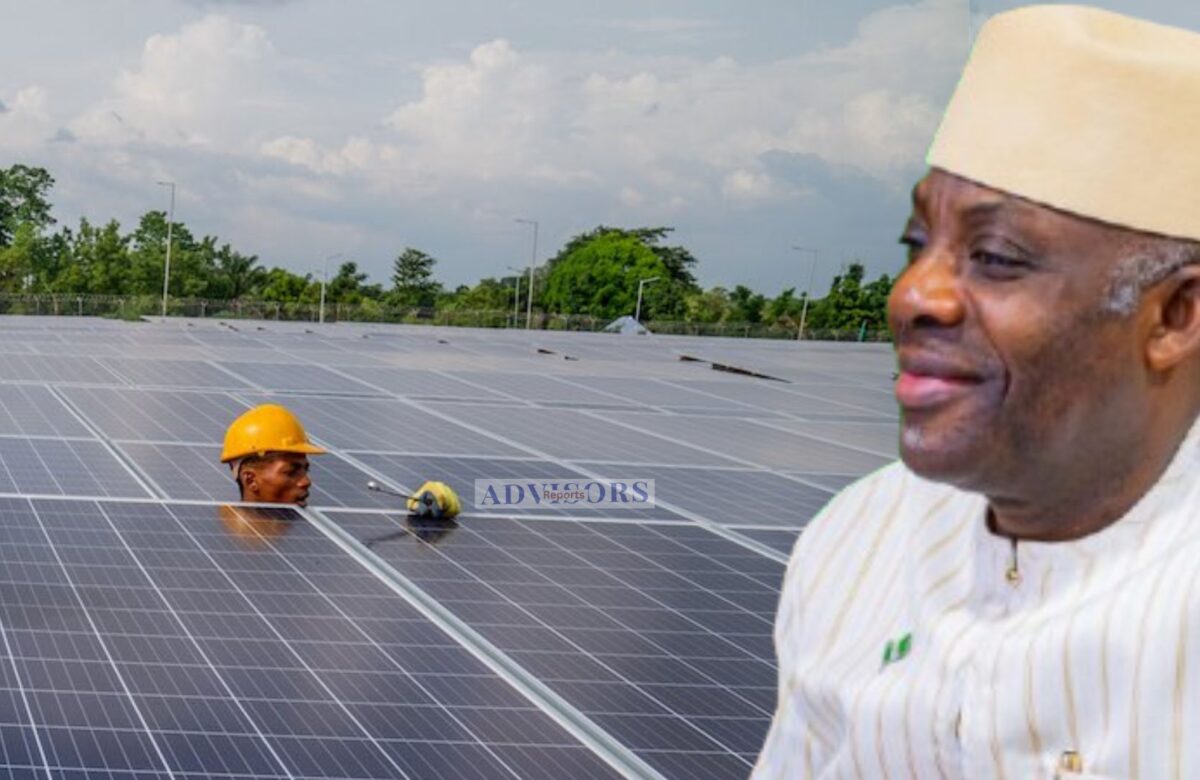
The Federal Government has approved the inclusion of Solar Photovoltaic Installation and Maintenance as an optional subject for both Junior and Senior Secondary School students, under compulsory Trade/Pre-vocational studies.
Boriowo Folashade, Director of Press and Public Relations at the Ministry of Education, disclosed this in a document obtained by Advisors Reports on Wednesday.
Other trade subjects available to students include Fashion Design and Garment Making, Livestock Farming, Beauty and Cosmetology, Computer Hardware and GSM Repairs, as well as Horticulture and Crop Production.
In addition, the revised curriculum introduces Earth and Environmental Science, Sustainability and Climate Change as part of efforts to integrate contemporary global issues into Nigeria’s education system.
Checks by Advisors Reports revealed that under the new structure, Junior Secondary School students are expected to offer between 12 and 14 subjects.
At the Senior Secondary level, compulsory subjects have been reduced from 12 to between 8 and 9, while students in technical schools can now take 9 to 11 subjects.
At the primary school level, pupils in Primary 1–3 are to offer a minimum of 9 and a maximum of 10 subjects, while those in Primary 4–6 can offer between 10 and 12 subjects.
Minister of Education, Dr. Maruf Tunji Alausa, had earlier in the week explained that the curriculum review was aimed not only at streamlining the number of subjects but also at improving content to enable deeper learning.
He noted that the review was conducted in collaboration with key stakeholders, including the Nigerian Educational Research and Development Council (NERDC), Universal Basic Education Commission (UBEC), National Senior Secondary Education Commission (NSSEC), National Board for Technical Education (NBTE), and relevant departments within the Ministry.
According to Dr. Alausa, the revised curricula will help reduce content overload and create more learning time for students.
He emphasised that the development reflects the government’s commitment to delivering quality education that is relevant, practical, and responsive to the needs of learners in today’s rapidly changing world.
Dr. Alausa, last year, noted that Nigeria must learn from advanced nations in order to remain competitive globally.
He stressed the importance of skill acquisition, referencing Scott Adams’ words: “Every skill you acquire doubles your odds of success.”
According to him, this principle underpins President Bola Ahmed Tinubu’s Renewed Hope Agenda and the Ministry of Education’s strategy.
He said, “That’s why we are aggressively reviving our technical and vocational education and training (TVET) system, aimed at equipping young men and women with ‘life skills’ that will enable them to be productive members of their communities, while also improving their employability and career opportunities.
“We will be creating opportunities for our young Nigerians, both men and women, to give them life skills to improve their employability, irrespective of their level of education, from basic education to tertiary institutions.
“We will also be adding to our #TVET curriculum #lifeskills in Renewable Energy (Solar), compressed natural gas (CNG), and mechanized farming to also support PBAT’s agenda of ensuring food security in our country,” the Minister said.