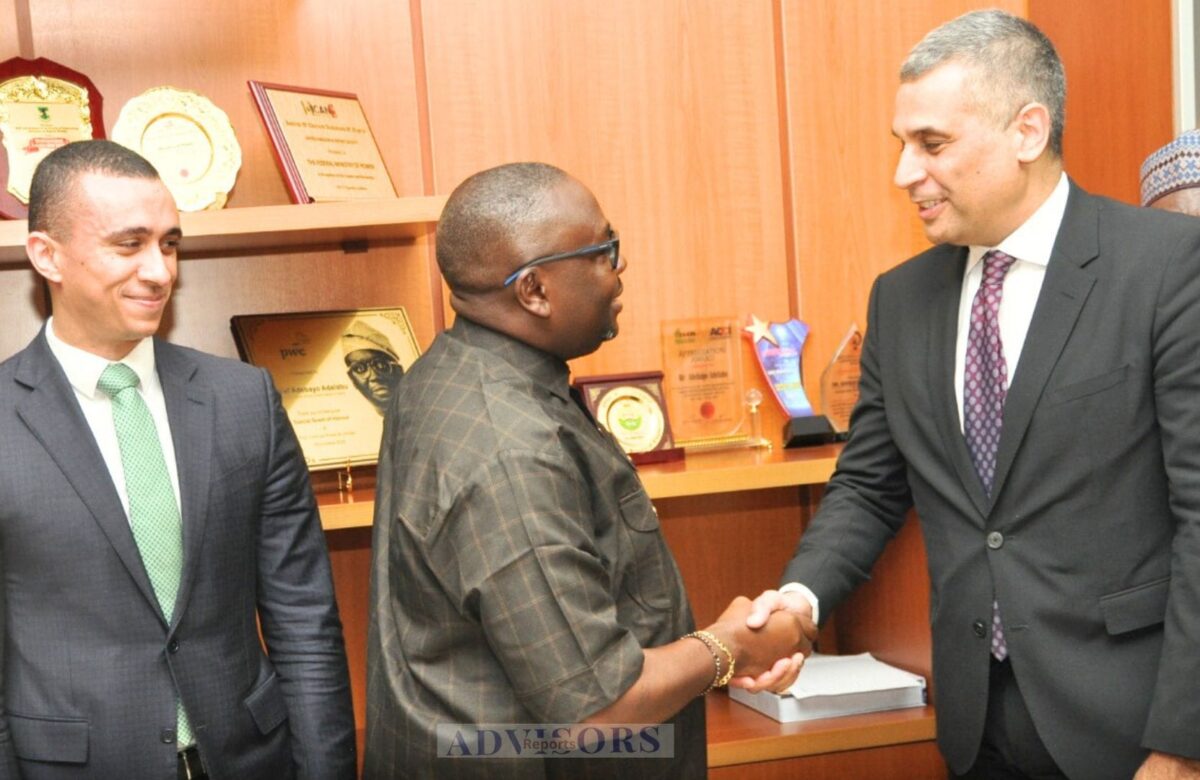
FG to learn from Egypt’s energy model for stable, affordable power supply
…. Egypt calls for activation of MoU with Nigeria to bridge metering gap, enhance energy collaboration
Oredola Adeola
The Federal Government has expressed its commitment to learning from Egypt’s experience in energy generation, transmission, and distribution to ensure reliable, stable, and affordable electricity access for all Nigerians.
In response, Egypt has appealed for the activation of the Memorandum of Understanding (MoU) with Nigeria on power projects, expressing interest in collaborating, particularly in bridging the metering gap and sharing best practices in energy access.
Chief Adebayo Adelabu, Minister of Power, revealed this during a recent meeting with the Egyptian Ambassador to Nigeria, Mohammed Fouad, in Abuja.
Discussions between Adelabu and Fouad focused on strengthening bilateral cooperation in energy expansion, with particular emphasis on renewable energy and rural electrification.
According to the Minister, this commitment aligns with the government’s rural development agenda aimed at improving electricity access in line with President Bola Ahmed Tinubu’s Renewed Hope initiative, which recognizes electricity as a fundamental right for all.

Adelabu highlighted Nigeria’s efforts to power remote rural areas through renewable energy initiatives, given the economic challenges of extending the national grid to these regions.
“Many rural areas cannot be connected to the grid due to financial constraints, but we cannot neglect them. Through our renewable energy program, we are closing this gap.
“We have secured significant investments, including $750 million from the World Bank’s DARES project and an additional $190 million from the Japan International Cooperation Agency (JICA), to support this initiative,” he stated.
He emphasized Nigeria’s vast renewable energy potential—ranging from solar and wind to hydroelectric resources—and reaffirmed the government’s commitment to harnessing these for sustainable energy access.
Adelabu commended Egypt’s achievements in the energy sector, describing the country as a model for infrastructure development.
He reiterated Nigeria’s interest in learning from Egypt’s successes in energy generation, transmission, and distribution, noting that Egypt’s transformation played a key role in Nigeria’s engagement with Siemens to stabilize the power sector.
“Egypt has made remarkable progress in energy transformation, and we are eager to collaborate and leverage your expertise. Our goal is to ensure reliable, stable, and affordable energy for all Nigerians,” he added.
The Minister also outlined Nigeria’s progress in the power sector since he assumed office 17 months ago, noting significant efforts to expand electricity access and address existing gaps.
He acknowledged challenges in grid reliability, aging infrastructure, and metering deficits, which the government is actively tackling through initiatives like the Presidential Metering Initiative (PMI).
Ambassador Fouad, on his part, reaffirmed Egypt’s enthusiasm for collaborating with Nigeria, particularly in bridging the metering gap and exchanging best practices in energy access.
He emphasized the shared objectives and mutual benefits of strengthening bilateral ties between both nations.
“We should activate the existing Memorandum of Understanding (MoU) and perhaps begin with virtual meetings to explore areas of mutual learning. Power is an ambitious sector, especially when it comes to renewable energy,” Fouad stated.
He further noted the similarities between Nigeria and Egypt in the energy sector, highlighting the vast potential for collaboration.
“Nigeria and Egypt share many commonalities, and there is immense potential for cooperation in the energy sector. We are committed to working together to achieve sustainable energy solutions for both countries,” he added.
While commending Minister Adelabu’s dedication to expanding power access across Nigeria, particularly through renewable energy initiatives, Fouad acknowledged the strides Egypt is making in increasing its renewable energy share.
He expressed interest in learning from Nigeria’s experience as Egypt aims to raise its renewable energy contribution from the current 14% to 42% by 2035.
“I want to commend you for your efforts in the power sector, which are visibly making an impact,” Fouad said.
“Our goal is to increase the share of renewable energy in our total electricity generation to 42% by 2035. At present, it stands at 14%, as fossil fuels, particularly gas, remain our primary energy source—similar to Nigeria.
“However, like Nigeria, we are also blessed with abundant solar and wind resources, which we must harness for renewable energy development. We look forward to collaborating with Nigeria in this area,” he added.
The envoy also extended an invitation to Minister Adelabu for a visit to Egypt, emphasizing the importance of continued exchanges to deepen cooperation.