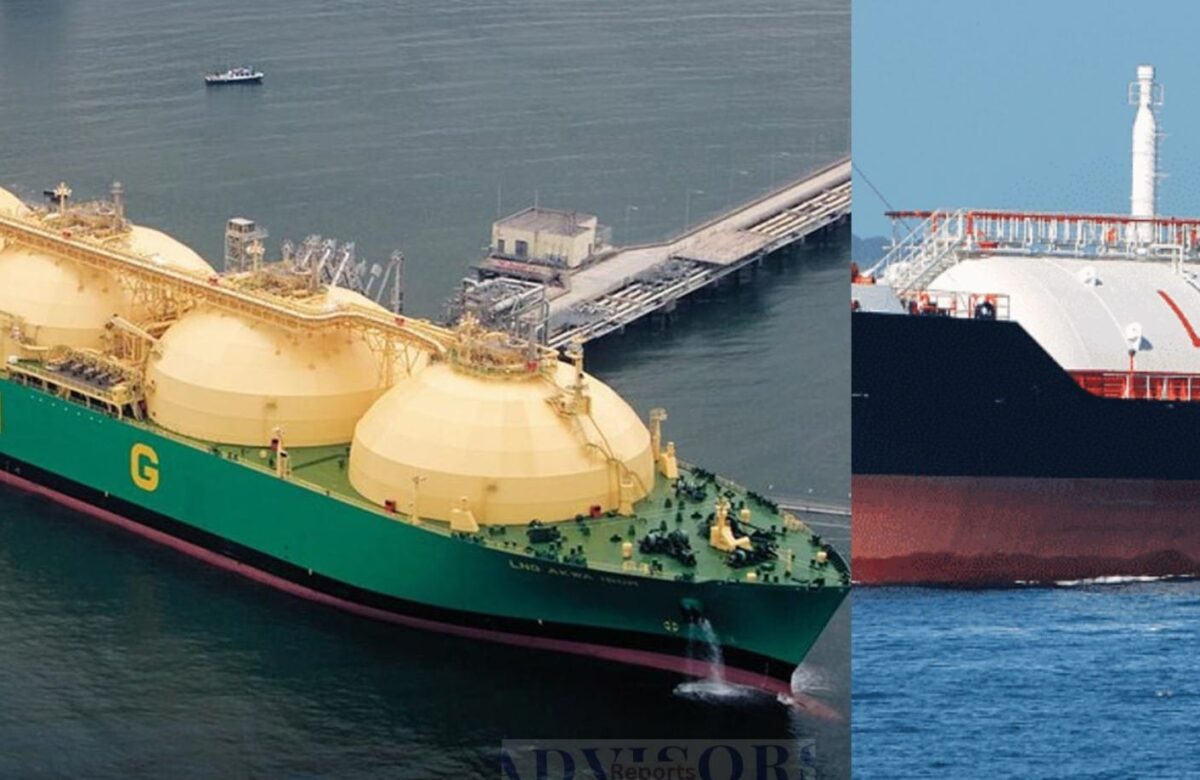
LPG vs LNG: Major differences, future prospects in global energy landscape
Mahmoud Ramadan with additional input from Advisors Reports
Liquefied Petroleum Gas (LPG) and Liquefied Natural Gas (LNG) are both vital players in the global energy sector.
Although they share similarities as hydrocarbons, their composition, properties, and applications highlight critical differences.
LPG: Comprising primarily propane (C₃H₈) and butane (C₄H₁₀), LPG is a byproduct of crude oil refining. It is stored and transported in pressurized cylinders or tanks.
LNG: Mostly methane (CH₄), LNG is natural gas supercooled to -162°C for liquefaction. It is stored and shipped in specialized cryogenic tanks or transported through pipelines.
Key Features
- Energy Density: LPG offers approximately 46 MJ/kg, while LNG provides a higher density of 55 MJ/kg.
- Storage and Transport: LPG uses pressurized cylinders, whereas LNG requires advanced cryogenic storage at extremely low temperatures.
- Environmental Impact: LPG has higher CO₂ emissions compared to LNG, making the latter a cleaner-burning fuel.
Applications
- LPG: Commonly used for cooking, heating, metal cutting, and off-grid power generation.
- LNG: Ideal for powering industries, marine transport, and large-scale energy plants, serving as a cleaner alternative to coal.
Pros and Cons
- LPG Pros: Portable, cost-effective, and easier to store.
Cons: Higher emissions and lower energy density. - LNG Pros: Cleaner combustion, higher energy efficiency, and scalability.
Cons: Requires advanced cryogenic technology and significant infrastructure investment.
Global Market Trends
- LPG: Growing at a Compound Annual Growth Rate (CAGR) of 4%, driven by residential and industrial demand in emerging markets.
- LNG: Expanding faster at ~6% CAGR, particularly in the Asia-Pacific region, as countries prioritize decarbonization and seek cleaner energy alternatives.
The Future of LPG and LNG
- LPG: Expected to remain relevant in rural areas and small-scale industries but may see reduced demand due to its higher emissions profile.
- LNG: Positioned as a frontrunner in the energy transition, offering cleaner energy and potential integration with hydrogen and carbon capture technologies.
While both fuels play significant roles today, LNG’s cleaner profile and scalability position it as the dominant fuel in the push toward a greener, more sustainable future.