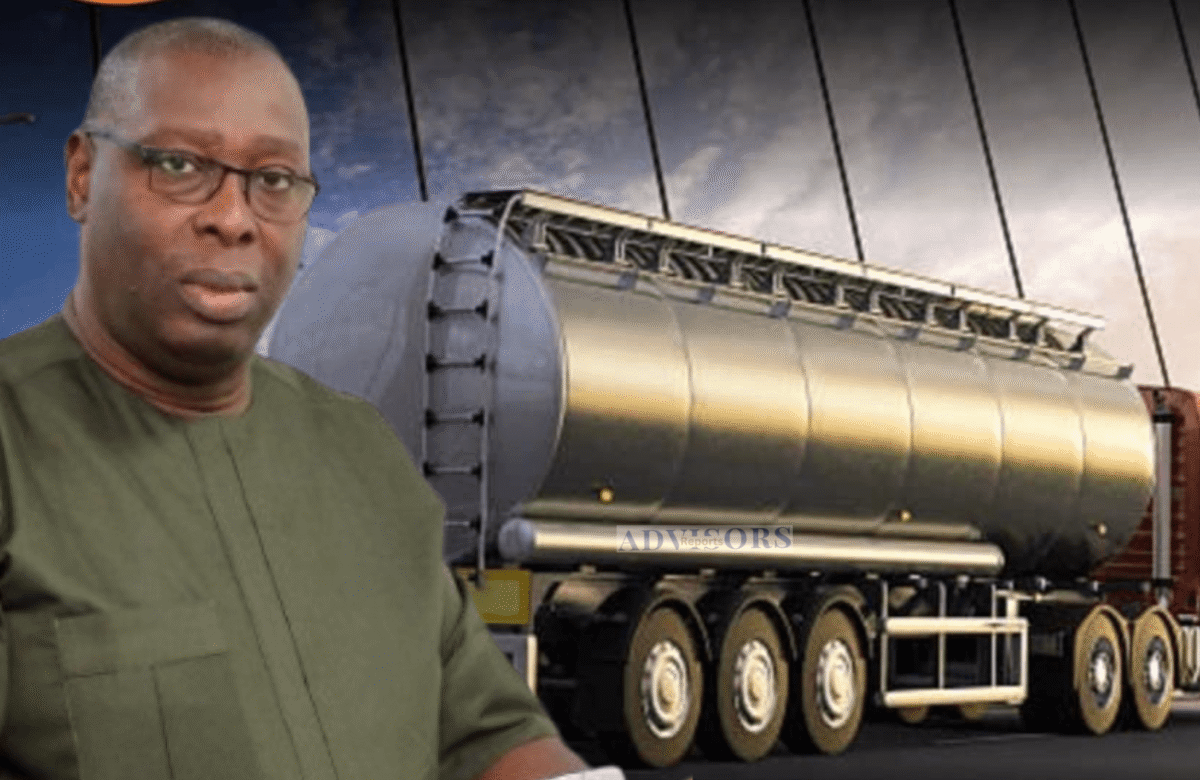
MEMAN members source 148 million litres of petrol from Dangote refinery in 10 weeks (Sep.16- Nov. 24)
…suspend importation, shift focus to local PMS supply from Dangote refinery amid competitive market
Oredola Adeola
Nigeria’s petrol supply chain is shifting as members of the Major Energy Marketers Association of Nigeria (MEMAN) sourced 148,463,142 litres of Premium Motor Spirit (petrol) from the Dangote Refinery between September 16 and November 24, 2024, averaging 2,120,902 litres daily over the 10 weeks.
Advisors Reports gathered that as of late 2024, MEMAN members, including 11 Plc, Ardova Plc, Conoil, MRS, NNPCL, and TotalEnergies, collectively account for approximately 40-50% of Nigeria’s petroleum products market share.
Clement Isong, CEO of MEMAN, revealed these figures during a quarterly webinar organised by the association for energy editors, attended by Advisors Reports on Wednesday.
Nkwoji noted that products lifted from Dangote Refinery were transported via trucks and vessels to marketers’ facilities in Lagos, highlighting the operational flexibility within the supply chain.
Providing a detailed breakdown of volumes lifted during the 10 weeks, Isong stated that MEMAN members loaded 29,468,333 litres in Week 38 (September 16–22, 2024), followed by 20,843,322 litres in Week 39 and 27,236,283 litres in Week 40.
He said, “However, volumes began to decline in subsequent weeks, reaching a low of 1,600,000 litres in Week 46.
“The supply slightly rebounded to 11,596,397 litres by Week 47 (November 18–24, 2024).
A breakdown of products lifted from the facility in 10 weeks, seen by Advisors Reports, showed that from Monday, September 16, 2024, to Sunday, September 22, 2024 (Week 38), MEMAN members loaded 29,468,333 litres of PMS.
This volume witnessed significant variations in subsequent weeks:
- Week 39: 20,843,322 litres
- Week 40: 27,236,283 litres
- Week 41: 20,016,355 litres
- Week 42: 16,525,714 litres
- Week 43: 3,827,914 litres
- Week 44: 14,037,929 litres
- Week 45: 3,310,895 litres
- Week 46: 1,600,000 litres
By Week 47 (Monday, November 18, 2024, to Sunday, November 24, 2024), the loaded volume slightly rebounded to 11,596,397 litres.
Advisors Reports revealed that this development stems from a Federal Government directive, issued through the Ministry of Finance, which ended NNPCL’s intermediary role and paved the way for independent petroleum marketers to negotiate and purchase PMS directly from local refineries, fostering competition and efficiency.
Isong in his presentation further disclosed that the spot price of petrol based on the 30-day pricing trend from October 10 to November 22, 2024, stands at ₦976.07 per litre, adding that the average price during the same period was ₦971.14 per litre.
He further revealed that the product cost per metric tonne is estimated at ₦708,390, calculated using a foreign exchange rate of ₦1,665.99 to the dollar.
Breaking down the factors influencing petrol pricing in Nigeria, Isong explained that critical cost components include the jetty location, such as ASPM, and a standard product quantity benchmarked at 38,000 metric tonnes.
He said, “The pricing methodology relies on the Argus Gasoline Euro-Bob benchmark for West African deliveries, combined with an average premium.
“The exchange rate is derived from the Central Bank of Nigeria’s (CBN) weighted average rate within the Nigerian Foreign Exchange Market (NFEM), which significantly impacts the final price,” he said.
Additionally, Isong noted that finance charges contribute heavily to the cost structure, pegged at 32% per annum over a 30-day cycle. Freight costs for Ship-to-Ship (STS) operations and related charges reflect a 10-day delivery timeframe to the ASPM jetty, Lagos Midstream Jetty (LMJ) located at the Lagos Apapa Harbour.
“Other local charges include those imposed by the Nigerian Ports Authority (NPA) for services such as towage, berthage, and cargo handling, as well as contributions to NIMASA at 2% of local freight and regulatory fees from the Nigerian Midstream and Downstream Petroleum Regulatory Authority (NMDPRA), which add a combined 1% levy,” Isong said.
He emphasised that the miscellaneous costs are capped at ₦2.00 per litre, further illustrating the country’s complex dynamics of fuel pricing.