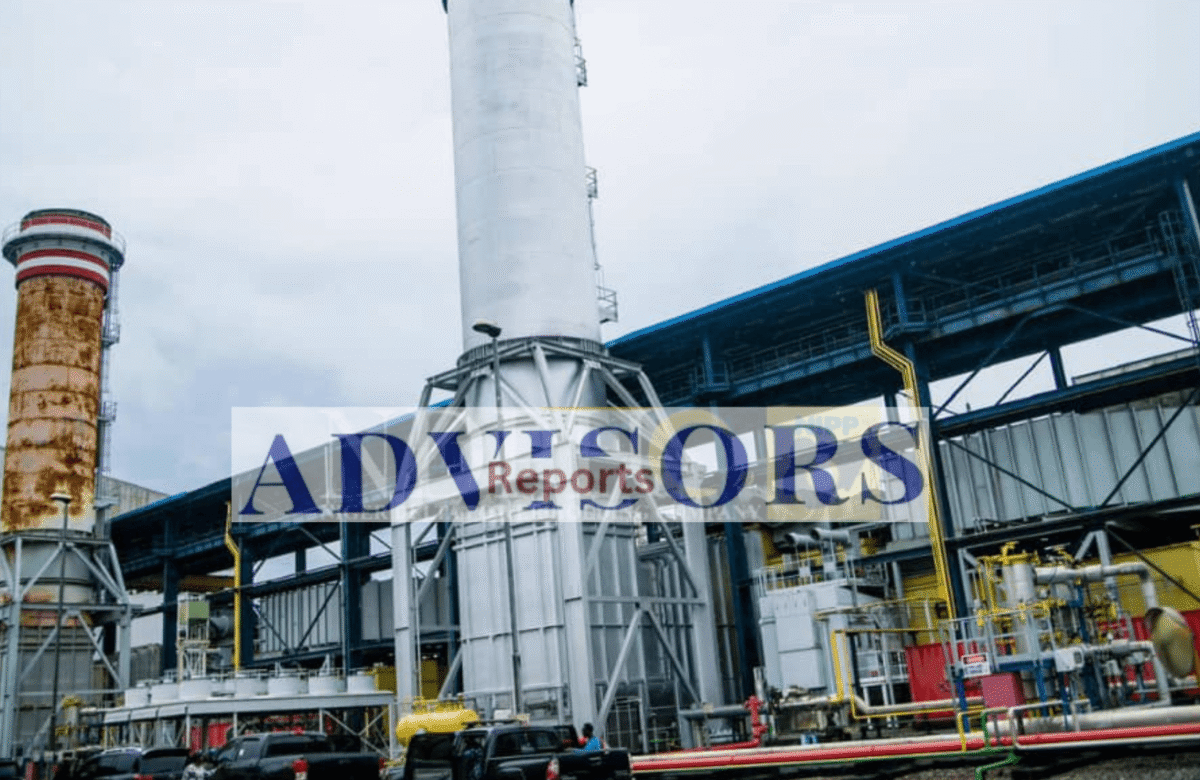
Nigeria’s 28 grid-connected power plants generate only 40% of installed capacity in Oct. 2024, record 13% decline in hourly generation
… grid experiences frequency deviations of up to 0.42%, voltage fluctuations of 6%, shows stability concerns
… Azura IPP Leads Nigeria’s Power Grid with 97% Availability
… NDPHC’s NIPP plants struggle with disastrous performance, as Omotosho NIPP at 4% availability, Alaoji completely offline
Oredola Adeola
Nigeria’s twenty-eight (28) grid-connected power plants, despite an installed capacity of 13,625 MW, delivered only 5,397 MW (40%) in October 2024—1% less than September—while average hourly generation dropped by 13% to 3,906 MWh/h compared to the previous month.
This was contained in the performance report of power plants in Nigeria for October 2024, recently issued by the Nigerian Electricity Regulatory Commission (NERC), and analysed by Advisors Reports.
The data for the period under review also highlight significant underutilization of the 28 power plants’ installed capacity, with available capacity at only 39.6% of the total installed and actual generation at 28.7%.
Nigeria’s grid performance showed slight frequency deviations, with an upper limit of 50.23 Hz and a lower limit of 49.54 Hz against the target range of 50.25–49.75 Hz, reflecting variances of 0.04% and 0.42%, respectively.
Voltage levels also deviated, peaking at 352.55 kV (2% above target) and dipping to 295.97 kV (6% below target), underscoring challenges in maintaining grid stability.
Advisors Reports’ gathered that the deviations, particularly in the lower ranges, highlighted stability concerns, as maintaining the target frequency is critical to preventing grid collapses that could disrupt power generation and distribution, potentially leading to total or partial grid collapses.
Out of the top 10 power producers among the 28 grid-connected plants, Azura IPP, with a capacity of 461 megawatts (MW), demonstrated an impressive 97% Plant Availability Factor (PAF) and an 85% Load Factor (LF).
Those metrics highlighted the plant’s exceptional reliability and consistent output, solidifying its position as the most dependable contributor to Nigeria’s power grid.
Okpai Power Plant, with a capacity of 480MW, also showcased strong performance, achieving a 75% PAF and an 81% LF.
Meanwhile, Jebba Hydro (578MW) matched Okpai’s availability at 75% but surpassed its load factor, reaching 89%.
In stark contrast, Afam VI (650MW) recorded a significantly low PAF of 27%, despite a reasonably good LF of 66%.
That discrepancy reflects limited availability due to maintenance challenges but commendable performance during operational hours.
Similarly, Zungeru Hydro (700MW) struggled with a 54% PAF and an LF of 66%, indicating inefficiencies in both maintenance and energy production.
Egbin Steam Turbine Plant (1320MW) achieved moderate availability with a 46% PAF but managed a respectable LF of 73%, demonstrating effective utilization of its capacity.
At the same time, Shiroro Hydro (600MW) maintained a balanced performance, achieving both a 69% PAF and LF, reflecting steady reliability and output.
Among the 18 other grid-connected plants, Paras Power Plant (110 MW) and Dadin Kowa (40 MW) delivered impeccable performances, achieving 100% availability.
Paras utilized 89% of its capacity to generate 98 MWh per hour, while Dadin Kowa recorded a load factor of 64% with an average hourly generation of 26 MWh.
Omoku (150 MW) reached a remarkable 100% load factor, generating 44 MWh per hour despite an availability of just 27%.
Olorunsogo (335 MW) achieved a notable 88% load factor with an average availability of 55%, producing 163 MWh per hour.
Plants such as Ibom Power (190 MW) and River IPP (180 MW) displayed balanced performances.
Ibom Power operated at 29% availability with a 74% load factor, while River IPP achieved 47% availability and a 62% load factor, reflecting their potential for steady contributions to the grid.
Further analysis also showed that power plants under the National Integrated Power Project (NIPP), owned by the Niger Delta Power Holding Company, have continued to perform poorly, with plants such as Omotosho NIPP (500 MW) recording a Plant Availability Factor (PAF) of just 4% and a Load Factor (LF) of 13%. resulting in a minimal energy output of 3 MWh per hour.
Other underperforming plants include Ihovbor NIPP (PAF 10%, LF 13%), Sapele GT NIPP (PAF 15%, LF 26%), and Olorunsogo NIPP (PAF 4%, LF 13%), while Geregu NIPP also struggled with a low 19% Load Factor.
At the lower end of the spectrum, Alaoji NIPP (500 MW) was completely non-functional, recording zero availability and generation.
On the other hand, Sapele ST (720MW) showed a 10% Plant Availability Factor (PAF) and a Load Factor of 19%, while Trans Amadi (100MW) reported a very low PAF of 2%, but managed a high Load Factor of 89%, with an average hourly generation of just 2 hours for the month.
Advisors Reports’ analysis of the data highlighted significant disparities in the performance of Nigeria’s 28 grid-connected power plants, with some exemplifying operational excellence while others struggle due to maintenance and efficiency challenges.
It also underscored the urgent need for targeted interventions to boost the output of underperforming plants and optimize the nation’s energy infrastructure.