Nigeria’s refining sector expands with 9 LTEs, 7 LTCS, 4 LTOS issued for modular refineries
… gas sector achieves 16 BSCF/D processing, 5 BSCF/D transportation, 1.5 BSCF/D distribution capacity – NMDPRA Chief Executive
Oredola Adeola
The Nigerian Midstream and Downstream Petroleum Regulatory Authority (NMDPRA) has confirmed the expansion of Nigeria’s refining sector with the issuance of nine Licenses to Establish (LTEs), seven Licenses to Construct (LTCS), and four Licenses to Operate (LTOS) for modular refineries, fostering local production while curbing reliance on imports.
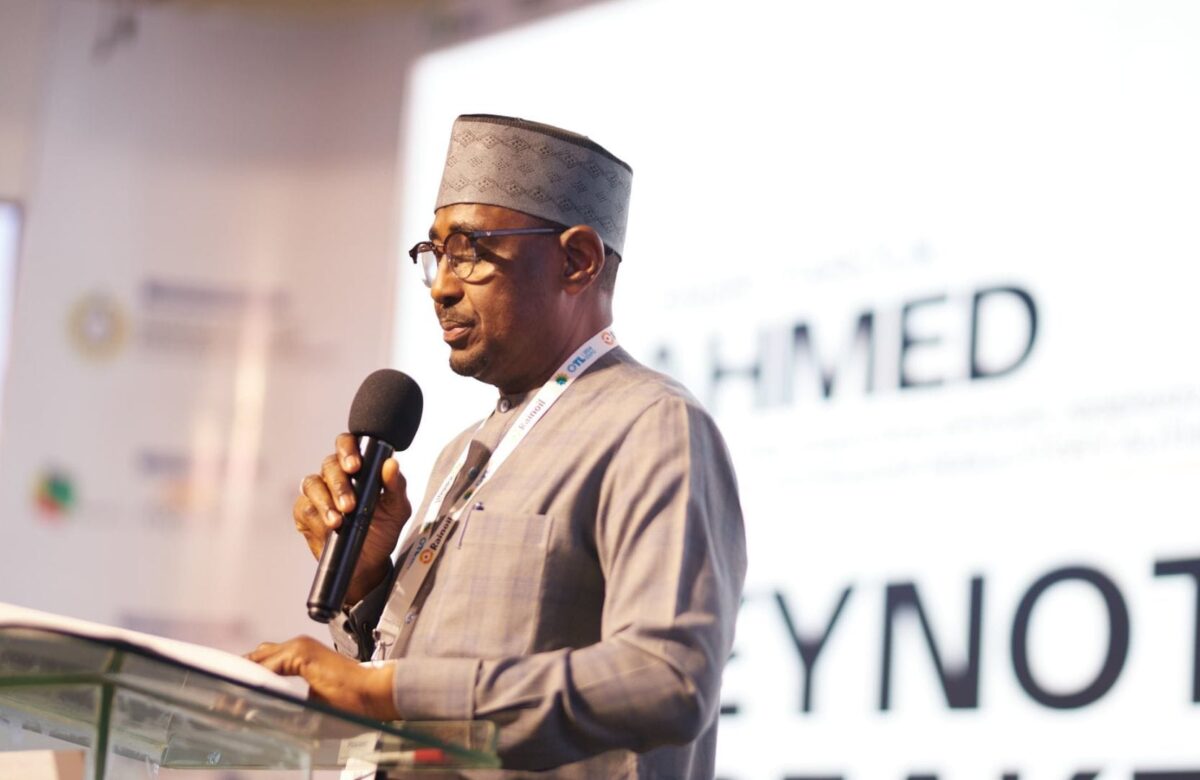
Engr. Farouk Ahmed, Chief Executive of the Nigerian Midstream and Downstream Petroleum Regulatory Authority (NMDPRA) made this known in his keynote address at the 18th OTL Africa Downstream Energy Week summit held on Monday, in Lagos.
Speaking on the theme of the Conference, “Alliances for Growth,”, the Chief Executive noted that the NMDPRA has revised and consolidated its regulations through strategic Industry stakeholder engagements with a view to streamline the regulatory framework for ease of compliance in the sector
He stated that Nigerian has experienced significant advantages from innovative policies introduced over the past eighteen months, thanks to the bold reforms initiated by President Bola Tinubu.
Those reforms, according to him, have repositioned the sector as an attractive investment destination, encouraging the establishment of profitable and viable business ventures within the oil and gas industry.
“Nigeria is poised to achieve targets of 3 million barrels per day in crude oil production, a projected 10 billion standard cubic feet per day in domestic gas utilization and enhanced domestic refining capacity that positions Nigeria as a net exporter of petroleum products,” he asserted.
The NMDPRA Chief emphasized that the Nigerian petroleum industry possesses the necessary enabling structures for growth and success.
He reaffirmed the NMDPRA’s commitment to supporting President Tinubu’s reform initiatives in the midstream and downstream sectors through improved regulatory processes, including efficient licensing, permits, and authorizations.
“In the past year, the NMDPRA has revised and consolidated regulations through strategic engagements with industry stakeholders to streamline the regulatory framework for easier compliance.
“This effort is complemented by the issuance of relevant guidelines and the automation of processes to strengthen regulatory clarity and enhance compliance,” Engr. Ahmed explained.
The NMDPRA’s boss further explained that the gas sector is expanding rapidly, boasting a licensed processing capacity of 16 billion standard cubic feet per day, a transportation capacity of 5 billion standard cubic feet per day, and a distribution capacity of 1.5 billion standard cubic feet per day.
According to him, the NMDPRA is actively implementing measures to ensure quality and safety in the industry, engage stakeholders strategically, and provide regulatory support for key government initiatives, including the Decade of Gas and the Pi-CNG programs, to realize the full aspirations of the Petroleum Industry Act (PIA).
The CE NMDPRA therefore announced plans to champion the development and adoption of a uniform gas transportation code.
He said, “This initiative aligns with the progression of the West African Gas Pipeline (WAGP) to Morocco, aiming to facilitate effective natural gas movement across the regions.
Engr. Ahmed emphasized that the authority would explore mechanisms to establish an association for Energy Regulators in West Africa.
“This association could potentially integrate with existing regional regulators from East and South Africa to form a pan-African Energy Regulators Association, streamlining regulations and policy formulations across the continent.
Ahmed also highlighted the promotion of Compressed Natural Gas (CNG) as a viable alternative to Premium Motor Spirit (PMS) and Automotive Gas Oil (AGO) for mobility fuel.
“Several interventions are being implemented to support the expansion of CNG infrastructure through the Pi-CNG, the Decade of Gas Program, and the MDGIF.
“We are progressively expanding auto-CNG infrastructure, with plans for most retail outlets to install CNG add-ons to accommodate the growing number of CNG vehicles nationwide,” he added.
According to him,” The NMDPRA is committed to working closely with stakeholders to accelerate the necessary expansion of CNG infrastructure.
He emphasised that NMDPRA is collaborating with relevant stakeholders to implement new safety and compliance policies, particularly in the burgeoning CNG sector.
Speaking on the ongoing government initiatives aimed at improving the affordability and availability of cooking gas, Ahmed stated that NMDPRA has been engaging stakeholders, particularly Chevron Nigeria Limited and Mobil Producing Nigeria, on the domestication of Liquefied Petroleum Gas (LPG) produced in-country, akin to the Nigeria LNG Limited, which has domesticated 100% of its butane production since 2022.