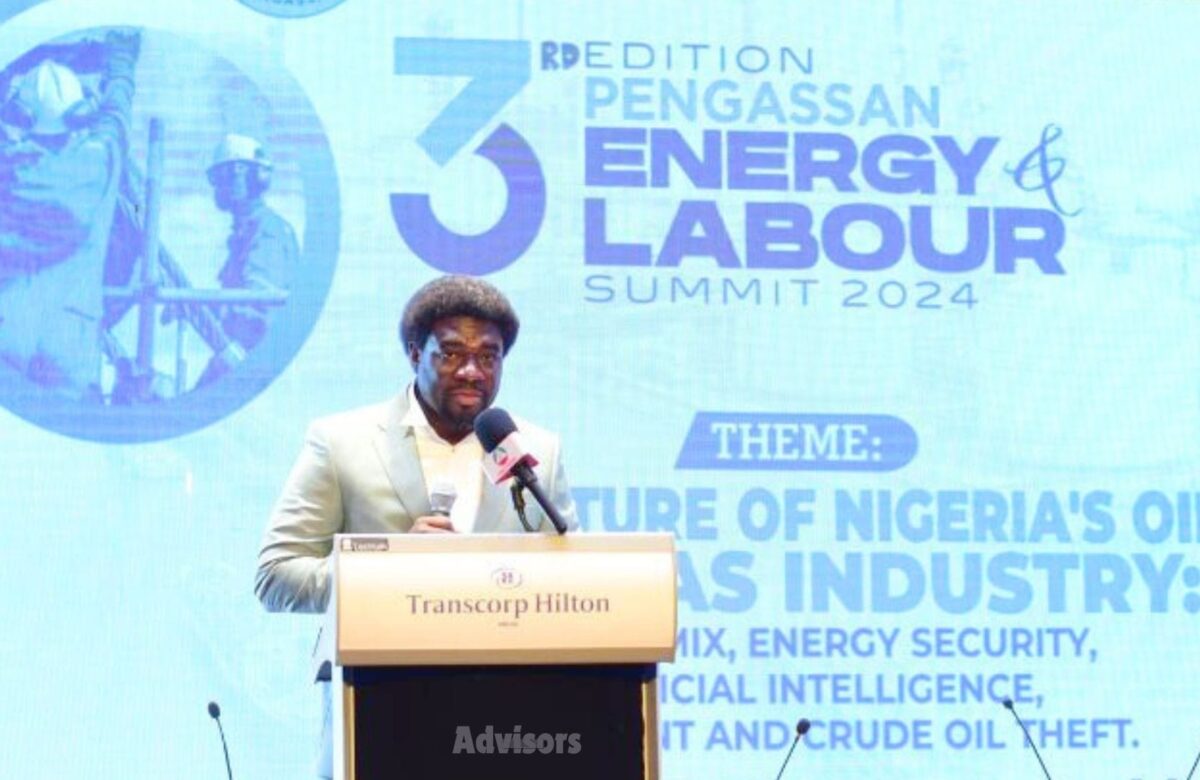
PENGASSAN urges FG to divest 51% stake in PH, Kaduna, Warri refineries, adopts NLNG model for enhanced energy security, products affordability
… urges NNPCL to increase stake in Dangote Refinery to from 7% to 45% to guarantee fuel assurance Nigerians
… recommends generative AI to monitor petroleum supply chains, combat smuggling, enhance energy efficiency
Oredola Adeola
PENGASSAN has called on the Federal Government, through Nigerian National Petroleum Company Limited (NNPC Limited) to divest 51% of its controlling stake in Nigeria’s four refineries to core investors, to 49%, following the successful Nigerian LNG model, arguing that this strategic move is crucial for boosting energy security and ensuring the nation’s economic resilience.
PENGASSAN further urged the Federal Government to raise its stake in Dangote Refinery from 7% to at least 45%, emphasizing that such an investment would strengthen Nigeria’s energy security, with the refinery reportedly open to negotiations if the price is favorable.
Comrade Festus Osifo, PENGASSAN President, disclosed this on Tuesday during a press conference in Lagos, where he outlined key points from the communique issued at the close of the 3rd PENGASSAN Energy and Labour Summit (PEALS 2024) in Abuja, last month.
Advisors Reports confirmed that the Summit was themed “The Future of Nigeria’s Oil and Gas Industry: Energy Mix, Energy Security, Artificial Intelligence, Divestment and Crude Oil Theft.” addressed critical issues, including divestment strategies and boosting energy security through increased government stakes in key refineries.
According to Comrade Osifo, the Summit called on the Federal Government to develop and strengthen the country’s oil and gas value chain to ensure a more efficient and reliable distribution system downstream.
He said, “Without such a system, the country would continue to face recurring fuel shortages as its reliance on a truck-based distribution system is deficient and inadequate to meet the demands of Nigerians given its vulnerability and disruptions due to bad roads, flooding and ad-hoc logistics arrangements.
“The government should partner with players in the private sector to maintain the already available petroleum product storage in the six geopolitical zones in the country.
“Expansion of pipelines that could be used in the delivery of refined petroleum products across the length and breadth of the country as this will reduce the pressure put on our roads by trucks carrying these products.
“The government through its partners should deepen the reach of Compressed Natural Gas (CNG) infrastructures across every city in Nigeria, because the infrastructure for this product is sparsely distributed across the country.
Osifo further emphasised that in order to ensure energy security, the Government must do all it can to stabilize the exchange rate as the continuous slide of the Naira will greatly hamper the affordability of energy in Nigeria in order to achieve affordability of petroleum products across the country.
The Summit in the Communique noted the recent trend of divestment by the International Oil Companies (IOCs) which was driven by the combination of global energy transition goals, financial prudence, portfolio rationalization and evolving regulatory environment.
The Summit however cautioned that divestments present both risks and opportunities for Nigeria, including a reduction in foreign direct investment, technical expertise and a potential dip in production levels.
PENGASSAN through the summit therefore recommended a comprehensive divestment framework under the Petroleum Industry Act (PIA) to guide asset divestment by Licensees and Lessees in the Nigerian Upstream Petroleum Sector should be strictly adhered to and implemented.
The Association noted that pending when the PIA is amended to include the divestment framework, the current framework promulgated by NUPRC must be gazetted for full implementation.
The Summit also recommended that a job protection system should be developed by the government in order to ensure that Nigerians do not lose their jobs post divestment, while an MOU must also be signed between the divesting companies and the trade unions to protect members’ jobs and enhance their welfare.
Key stakeholders in Nigeria’s oil and gas industry at the Summit further called for a people-focused strategy in deploying generative Artificial Intelligence (AI) within the energy sector to create sustainable solutions that enhance energy supply chains, improve quality of life, and address society’s evolving needs.
They outlined key strategies for an AI-driven future, including job automation, fostering collaboration, and developing in-house training programs to upskill employees.
These strategies, according to them, aim to modernize petroleum product transportation, deliver industrial solutions, and provide reliable and affordable energy while minimizing risks to human safety.
The stakeholders also acknowledged several challenges to AI implementation, such as competing priorities, resistance to change, high training costs, and gaps in infrastructure and technology.
According to the communique, “To overcome these, the summit recommended upskilling and reskilling employees through both virtual and hands-on training, locally and internationally.
“It also stressed the need to deepen AI’s role in combating crude oil theft, enhancing energy security, and tracking petroleum product distribution to prevent cross-border smuggling, a major threat to Nigeria’s energy supply.”
Comrade Osifo further mentioned that participants at the summit called on stakeholders, including PENGASSAN and the sister unions in the industry to work together to strengthen regulatory frameworks and enforcement to tackle all forms of challenges confronting the industry.
The PENGASSAN President emphasised that efforts to tackle industry challenges cannot be driven by the Government alone but require the concerted drive of all stakeholders through the development of innovative solutions, sharing of information and supporting the enforcement of laws designed to protect our resources.
According to him, “We expect that all stakeholders will roll up their sleeves and put into quick use the practical recommendations rolled out above as we all collaborate to ensure sustainability in our industry- indeed the soul of Nigeria’s economy.”
Participants at the summit identified crude oil theft as a major threat to energy security and recommended using AI-powered technology to curb it, including drones, satellite imaging, predictive analytics, and automated threat detection.
They emphasized that deploying these technologies, along with machine learning, blockchain integration, and supply chain optimization, would enable real-time reporting for swift intervention.